Showing posts with label grain. Show all posts

May 10, 2023

Grain for animal feed

The major feed grains are corn, sorghum, barley, and oats. Grains have properties which makes them very suited for feeding of animals. They have a high content of energy yielding components. In addition, they have a very low moisture content and they can be stored for very long periods of time.

Corn, oats, barley, and milo (sorghum grain) are the most important energy-rich grains. They contain about 70 to 80 percent of TDN (total digestible nutrients) including 7 to 10 percent of digestible protein. Wheat bran, rice bran, wheat middlings, rye middlings, and rice polish are byproduct feeds from the grain milling industry.

Grains are the edible seeds of plants. Cereal grains are actually the seeds of grasses which develop as the plant matures over the growing season. During this development, the seed fills with starch and associated protein. Increasing the concentration of starch at maturity is the plant’s method of storing energy for germination and early seedling development.

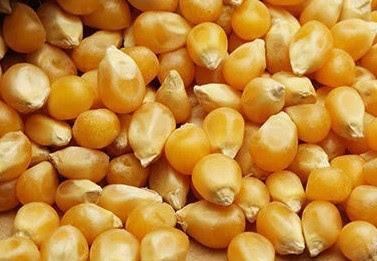
Corn is the primary U.S. feed grain, accounting for more than 95 percent of total feed grain production and use.

Corn is a major component of livestock feed. Feed use, a derived demand, is closely related to the number of animals (cattle, hogs, and poultry) that are fed corn and typically accounts for about 40 percent of total domestic corn use.

The cattle feeding sector relies on cereal grains as concentrated sources of energy, particularly in finishing rations where cereals make up to 90% of the ration dry matter. This heavy reliance on cereals as an energy source is due in part to the fact that the cost per unit of dietary energy is typically less for cereal grains than for any other readily available feed source.

There are a number of different grains that are commonly fed to horses. The most common are oats, corn, and barley. Milo (sorghum) and wheat are other grains that are fed to horses as well. Grains such as oats, barley, and corn can be fed whole, though many are typically processed to increase digestibility.
Grain for animal feed
April 1, 2021

Harvesting winter wheat

Combines harvest the crop once the kernels have dried about 10 to 15 percent moisture. Harvesting of winter wheat starts from late May through early September, with the bulk of the crop being harvested between early July and mid-July. Harvesting of spring wheat begins in late July and is completed by late August.

Wheat-threshing crews make their living in the Great Plains by following the harvest northward, beginning in the winter wheat sections of Texas.

Then week by week they move north through the Dakotas and arrive finally in the Canadians Prairies, where the harvest comes last.

Excessive rains during harvest can slow down the harvest process, though very rarely does yield suffer much in years with a protracted harvest. The greatest damage to winter wheat during spring and summer is from disease.

Hard winter and hard spring wheat are noted for having high protein content and are typically used for making pan and hearth breads, hard rolls, bagel, buns, other yeasts leavened products and all purpose flour.
Harvesting winter wheat

November 28, 2017

Corn: Structure and Properties

The Structure and Properties of Corn
The physical properties of corn are important in the design of handling equipment and storage facilities. These properties of course, are affected somewhat by moisture content.

Compared to other grains, corn has a unique shape and low specific gravity, but many other properties are similar to other cereals.

Corn kernels are the largest cereal seed, weighing 250 – 300 mg each. They are flat seeds due to pressure during growth from adjacent on the cob.

The corn kernel has a blunt crown and pointed conical tip cap. The corn kernel is botanically classified as a caryopsis (dry, indehiscent, single seeded fruit) and is attached to the cob by the pedicle.

The kernel contains a complete embryo and all the structural nutritional and enzymatic functions required for growth and development into a plant.

The kernel is composed of four anatomical parts; the tip cap, which provides the point of attachment to the cob; the bran, which is the protective outer covering; the germ or embryo, which becomes the new plant; and the endosperm, which is the reservoir of nutrients to support germination.

Each anatomical part of the corn kernel has a different composition.

The largest fraction of the kernel is the endosperm which is largely composed of starch, the reserve energy supply for a germinating embryo.

Endosperm cells are packed with starch granules embedded in a combination matrix of amorphous protein.

Also embedded in this matrix are protein bodies composed almost entirely of the storage protein zein.

Corn is often harvested as soon as the moisture content drops below 28%. Unless quickly dried, high moisture corn is subject to raid deterioration, especially by mold infestation.

However, high temperature drying, which is occasionally used during the busy harvest period to speed drying operations, can adversely affect wet milling properties and air inlet temperature exceeding 50 degree C should be avoided.

Any hygroscopic material material like corn losses (desorbs) or gains (adsorbs) moisture depending on whether its water vapor pressure (water activity) is greater or less than that of its environment.

Equilibrium moisture content for corn is complicated by the hysteresis effect, in which the equilibrium moisture content depends on whether the grain is desorbing or adsorbing.

Also each component has a different affinity for moisture, so it is not surprise that different corn fractions have different equilibrium moisture isotherms.

Because different types of corn have slightly different composition, their moisture sorption isotherms may vary accordingly.

The critical moisture content for “safe” storage of corn is generally to be 15%, but lower moisture contents are required for corn to be stored for long periods at warm temperatures as occur in the tropics.
Corn: Structure and Properties

April 25, 2015

Wild rice crop

Wild rice is an annual plant that grows from seed. Zizania aquatica L. and Zizania palustris L. is not closed related to rice.

It is native to North America. In it natural states it is found mainly along the shores of rivers and streams in shallow water and at outlets and inlets of lakes. Seed germination is evident when the coleoptiles that covers the leaves breaks through the tough outer layer the seed.

Germination of the wild rice seed begins with snowmelt and spring runoff from mid to late April.

Wild rice is primarily wind pollinated, a process that ensures genetic diversity through outcrossing. In addition, the plant has some capacity for self-pollination. Breezes, birds feeding on wild rice worms, and insects – particularly bees – all assist pollination.

The wild rice plant is 5-6 feet tall with five or six leaves on the main tiller and can develop 20-30 tillers.

Kernel of mature grain with lemma and palea (hulls) removed (caryopsis) vary from 0.3 to 0.18 inches in diameter.

Wild rice grows best in full sunlight and the light intensity in the underwater habitat can become a limiting factor of algae, scum, or debris crowd the surface.
Wild rice crop

April 29, 2014

Wheat: species and variety

Cereals, including wheat are the major food crops for all humans and are the principal resources that have led to the emergence of human civilization as per today.

Wheat was and established food crop at the dawn of history. It probably originated from grasses native to the Middle East, but cultivation of bread wheat was common in Europe by the time of Greek and Roman Empire, and wheat was brought to America by the earliest explorer.

Wheat was the leading produced, averaging 620 MMT annually, representing almost one-third of all cereal production. It is grown in temperate zones around the world and on some part of every continent except Antarctica.

The principal species of wheat are:
*Triticum vulgare or bread wheat
*Triticum durum, which has extra hard kernels, used primarily for macaroni an related pasta products. 
*Triticum compactum or club wheat has a very soft kernel.

Most of the wheat varieties cultivated today are grouped together under the broad category of common or bread wheat which accounts for approximately 95% of world production.

There are numerous varieties and cultivars within each species. Wheat also classified in the United States according to whether it is hard or soft, white or red, and planted in winter or spring. It is also graded according to such criteria as test weight per bushel and content of damaged kernels, foreign materials, and wheat of other classes.

Wheat class and physical condition are the most important factors determining wheat milling potential and end-product quality.
Wheat: species and variety

June 16, 2011

The Economy of Cereal Grains


Of all the plants on which humans have depended for food, those that produce the cereal grains are by far the most important, as they have been since earliest recorded time.

Cereal grains are the seeds of cultivated grasses that include wheat, corn, oats, barley, rye, rice, sorghum, and millet.

There are a number of reasons why cereals have been so important in our diet. They can be grown in a variety of areas, some even in adverse soil and climatic conditions.

They give high yields per acre as compared to most other crops, and once harvested, their excellent stored stability combined with their nutritional value makes them the most desirable of foods for holding in reserve.

They are easy to package and transport and they can be used to produce a large variety of highly desirable foods both for humans and animals, as well as beverages for human consumption.

Cereal grains are the most important source of the world’s total food. Rice alone is reported to supply the major part of the diet for more than one half of the word’s population.

Cereal grains are the staple food of the peoples of developing countries, providing them, with about 75% of their total caloric intake and about 67% of their total protein intake.

The grains are eaten in many ways, sometimes as a paste or other preparation of the seed, more often milled and further processed into flour, starch, oil, bran, syrup, sugar, dried breakfast forms, and so forth. They are also used to feed the animals that provide us with meat, eggs, milk, butter, cheese, and a host of other foods.
The Economy of Cereal Grains

June 1, 2011

Wheat Structure

Wheat Structure
Wheat structure is a single seeded fruit, 4 to 10 mm long, consisting of a germ and endosperm enclosed by an epidermis and a seed coat.

The fruit coat or pericaprs (45 to 50 um thick) surrounds the seed and adhere closely to the seed coat.

The wheat color, depending on the species and other factors is red a to white and is due to material present in the seed coat.

Wheat also is classified based on physical characterizes such as red, white soft, hard spring or winter.

The outer pericaprs is consist of the epidermis and hypodermis. The epidermis consists of a single layer of cells that from the outer surface of the kernel.

On the outer walls of the epidermal cells is the water impervious cuticle. Some epidermal cells at the apex of the kernel are modified to form hairs.

The hypodermis is composed of one to two layers of cells. The inner pericaprs is composed of intermediate cells and cross –cells inward from hypodermis.

Long and cylindrical tube cells constitute the inner epidermis of the pericaprs. In the crease, the seed coat joins the pigment strand, and together they form a complete coat about the endosperm and germ.

Three layers can be distinguished in the seed coat: a thick outer cuticle, a “color layer” that contains pigment, and a very thin inner cuticle.

The bran comprises all outer structures of the kernel inward to, and including the aleurone layer.

This layer is the outer layer of the endosperm, but is considered as part of the bran by millers.

The aleurone layer is usually one cell thick and almost completely surrounds the kernel over the starchy endosperm and germ.

The endosperm is composed of peripheral, prismatic and central cells that are different in shape, size and position within the kernel.

The endosperm cells are packed with starch granules, which lie embedded in a matrix that is largely protein.
Wheat Structure

December 18, 2008

Sorghum

Sorghum
The genus of Sorghum is found in warm, dry climates, especially in Africa, India, Pakistan, China and the Southern USA where its members are grown as important grain or forage crops. Because sorghums have been in cultivation for a long time and because interspecific hybrids are easily formed, the taxonomy of the genus is somewhat confused. Until recently the cultivated types were loosely grouped together in the species Sorghum vulgare, but a thorough revision of taxonomic relationships suggests that Sorghum bicolor is the species to which the grain crops should belong.

The seed of grain sorghum or dura as it is often called, contains no gluten, and hence is by itself not suitable for bread making. Normally for human consumption the grain is group into flour, mixed with water or fat and cooked to form a porridge or batter. Alternatively, the grain is fed to pigs or poultry, its starch may be used for a variety of purposes such as an adhesive or for sizing or it may be fermented to produce alcohol. Sorghum are also grown as forage crops and may produce high yields of the order of 30,000 kg/ha from several cuts throughout the year.

Best resulted are obtained from special forage types such as sorgo, sweet or sugar sorghum which is variously described as a variety of sorghum or as a separate species (Sorghum saccharatum). Sudan grass (S. Sudanese), a tall and tufted tropical grass, is often used top produce hybrids with sorghum, as for example the production forage plants Sudax or Sordan.

One possible problem with these forages is that contained in the leaves there may be a cyanogenic glycoside, dhurrin, which when eaten by animals hydrolyses to form poisonous hydrogen cyanide. In ruminants, hydrogen cyanide is rapidly detoxified in the rumen and liver by reaction with sulphide or cystine, but the danger of toxicity remains of glycoside levels are high or sulphur intake is low. The problem can be avoided by the choice of safe cultivars by not allowing stock to graze very immature growth, or by feeding as hay or silage.
Sorghum

September 2, 2008

Brewing and Flavoring with Malt

Brewing and Flavoring with Malt
Brewing
For brewing, the whole malt is ground and cooked with water and frequently other cereal adjuncts in a process known as mashing. The products of this are wort, the distinctively flavored dilute extract in which the complex carbohydrates of the cereal mash have been enzymatically converted to fermentable sugars, the wort is boiled to sterilized it; hops and yeast are added; and the mixture is fermented to make beer.

Flavoring with Malt
Apart from its function in brewing beer, malt is a desirable flavor in other food products, with or without the enzyme activity. Barley malt can be milled to separate the hulls and provide a meal or flour products for use in dry formulation, or it can be extracted with water (as in mashing) and the resulting extract concentrated to a syrup or dehydrated to a powder for use in flavor formulations. In formulating with any of these preparations, care must be taken to specify whether the desired product is one that retains its enzyme activity – i.e., is “diastatic” – or does not retain enzyme activity (nondiastic). Diastase was the original name for malt amylase, in use before it was known to consist of both alpha and beta amylase. Nondiastatic products are usually used for flavoring breakfast cereal, as otherwise an unwelcome liquefaction of the starchy components of a formula may occur.

Malt syrup is normally a brown viscous liquid with poor flow properties that is typically diluted with water before being added to the grain. It is available in degree of color and flavor concentration and results in an attractive light brown color developing in cereals during cooking, However, the use of too much in a formula may result in bitterness in the finished product.
Brewing and Flavoring with Malt

Popular Posts

Other interesting articles