Showing posts with label climates. Show all posts

January 29, 2023

Ideal climate to grow tea

Tea is one of the most important cash crops worldwide, playing a significant role in rural development, poverty reduction and food security in developing countries. The cultivation of tea requires strictly defined climatic and soil conditions.

Tea plant is an evergreen bush that flourishes in tropical, subtropical and temperate regions at elevations below 3000 m. Tea does not tolerate long droughts or frost and extreme heat. The best quality tea is produced at high altitudes of 1500 to 2250 meters above sea level.

Camellia sinensis var. sinensis grows in cooler mountainous regions, while Camellia sinensis var. assamica grows best in a tropical climate.

Tea grows in a wide range of latitudes of between 30◦ S and 42◦ N that satisfy the certain eco-physiological requirements of tea plants, including thresholds of climatic variables.

Tea requires rainfall of 1200mm to 2200mm that is well distributed throughout the year, and relative humidity of around 80 % (never less than 40%).

Tea is considered optimal conditions are annual precipitation at the level of 2500 - 3000 mm3 per square meter.

Tea plants can survive a wide range of temperatures between 10 to 30 ◦C. Solar radiation is another primary driver which plays a significant role in photosynthesis in plants. Excessive wind causes water deficit in tea plants due to high evapotranspiration.

The monsoonal climate, alternate wet and dry seasons and the high elevation of subtropical mountains in China, India, and Sri Lanka appear to provide above optimal conditions for tea cultivation.

Unfavorable conditions, such as droughts, floods, frosts or excessive heat, limit plant growth and lead to changes in the biochemical structure of the raw material which lead to a decrease in its quality.
Ideal climate to grow tea

April 20, 2022

Lentils Climate and Soil Requirements

Lentil is one of the less selective legumes in terms of climate and soil features. Lentils are currently cultivated in 53 countries around the world. Major producers are Canada, India, Turkey, Australia and the United States.

It is very hardy and can tolerate frost and severe winter to a great extent. It requires cold temperature during its vegetative growth and warm temperature at the time of maturity.

It can be grown to a altitude of 3000 meters. On the other hand, the seed yield per area decreases when the altitude increases. They are usually grown in semi-arid climates without irrigation. A minimum of 10 inches of annual rainfall is required for lentil production.

Lentil is a well-adapted plant that grows in a wide range of soil types. However, the heavy textured soils cause yield reduction, whereas sandy-loam soils are the most suitable for lentil growth.

Lentil does not tolerate flooded or waterlogged soils, and does best on deep, sandy loam soils high in phosphorus and potassium. Acidic soils are not fit for growing lentil. They can tolerate moderate alkaline or saline conditions and grow in soils with pH of 4.4 to 8.2, but are best adapted to soils with pH of 5.5 to 7.

The soil should be friable and weed free so that seeding could be done at uniform depth. Lentil is adapted to cool growing conditions, and the young plants are tolerant of spring frosts. This allows for early spring planting dates.
Lentils Climate and Soil Requirements

January 8, 2022

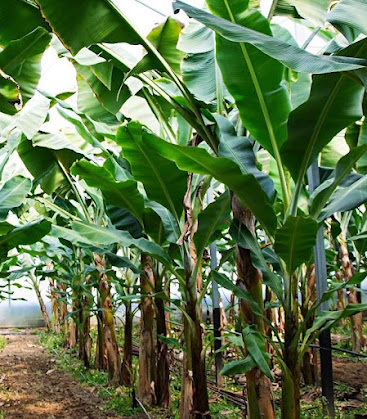
Climate for banana cultivation

Banana is a semi-perennial crop with a crop cycle nearly a year long under optimum conditions and even longer with lower temperatures or more erratic water supply.

Banana plants like warm and wet conditions also rainy climate year-round, along with fertile soils. Bananas need adequate moisture and protection from wind.

They grow best in the tropics, with an average temperature in the high 20s Celsius, and can be found in plantations in a wide band between 30° north and south of the equator.

Most varieties of bananas grow best with 12 hours of bright light and high humidity of 50% or higher. The ideal temperature range is around 26-30°C with RH regime of 75-85%.

Growth begins at 18ºC, reaches optimal growth at 27ºC and stop entirely when temperature reaches 38ºC.

Banana thrives in fertile, well-drained soils with high water-holding capacity. The optimal pH is between 5 and 7. Because banana is sensitive to salinity, the EC should not exceed 1.0 dS/ m.

Bananas are found in southern Europe, northern Africa, Pakistan, northern India and China at their northern extreme and in Argentina, Paraguay, South Africa and Australia at their southern extreme.

They are also grown in the tropics into mid-altitudes of higher than 1 500 meters above sea level in the Andes, Himalayas, Kilimanjaro and the East African Highlands.

Commercial plants are usually grown to just a few meters tall and are replanted every six years or so using the bulbous shallow-rooted rhizomes (called corms) that the adult plants produce.
Climate for banana cultivation

July 7, 2020

Suitable climate and soil for ginger planting

Ginger (Zingiber officinale Rosc.) belongs to family–Zingiberaceae is an herbaceous perennial, the rhizomes of which are used as a spice.

It is a slender monocotyledonous rhizomatous perennial herb, leaves are linear, sessile, glabrous, flowers are yellowish green, spikes are cylindrical and fruits are oblong capsules. Rhizomes are white to yellowish brown in colour, laterally flattened and irregularly branched.

Beside used as a spice, the dry ginger is also used for the production of oil, oleoresin, essence, soft drinks and non-alcoholic beverage. Ginger has manifold medicinal properties as a carminative and stimulation of gastro-intestinal tract.

Ginger requires a warm and a humid climate for growth. The plant thrives well from the sea level to an altitude of 1500 m; the optimum elevation being 300 and 900 m. Low to moderate rainfall during rhizome sprout and moderate to heavy rainfall during crop growth and then dry weather one month before harvesting coupled with 28 – 35 °C temperature is essential for higher yield and better quality of rhizomes. Ginger can be grown both under rain fed and irrigated conditions.

Being a shade tolerant crop, ginger can be grown with tall crops and crops that grow on poles. Well drained fertile, sandy loam to loam soils are well suited to grow ginger. It requires deep, well drained, humus rich soil. It is sensitive to water logging. It can be grown well on sandy loams, clay loams. m. A friable loam rich in humus is ideal. However, being an exhausting crop, it is not desirable to grow ginger in the same soil year after year.
Suitable climate and soil for ginger planting

March 23, 2009

Cultivation of Coffee Trees

Cultivation of Coffee Trees
The essential requirements for cultivation of coffee plants are water, illumination and ventilation.

The type of soil (edaphic factors) is less important; coffee trees grow as well in argillaceous-siliceous soil of granitic origin as in soil of volcanic origin.

However, the soil must be rich, with a pH between 4.5 and 6.0; also, the soil must be deep because root development is very extensive.

Coffea arabica is cultivated on plantations at altitudes of 3250 – 6500 feet (1000 – 2000 meters) where tropical climates are temperate.

Excessive heat and humidity are adverse conditions. Coffea canophera grows well in a tropical climate and needs atmospheric humidity near saturation.

Low temperatures around 32 degree F or temperatures above 86 degree F adversely affect coffee trees.

Even though coffee scrubs grow wild in shaded area, the coffee tress in highly productive plantations are cultivated in rows separated by banana tree and are well exposed to sunlight.

They are very sensitive to wind which explains the damage that cyclones can cause to coffee plantations.

Cultivation requires constant care and replacement of old trees with young plants obtained by germination of seeds or by cuttings.

Also, they must be protected from numerous parasites of which the most dangerous is rust caused by two fungi:
Hemileia vastatrix causes orange rust
Hemileia coffeicola results in flour like rust

A coffee tree attacked by rust loses its leaves. Other parasites (fungi, nematodes- thread worms, borers, scolytid-bark beetle, flies, pyralis-meal moth, crickets, caterpillars, bugs, etc) can also cause great damage.

Thus, it is necessary to ensure constant chemical or biological protection. For the past few years, this protection has been ensured by selecting coffee trees that are resistant to parasites without affecting the quality of the aroma of the finished product.

There is great hope that progress in genetic manipulation will result in long term improvement, especially since the chromosomal system of the coffee trees is now known.
Cultivation of Coffee Trees

Popular Posts

Other interesting articles